
Requirements
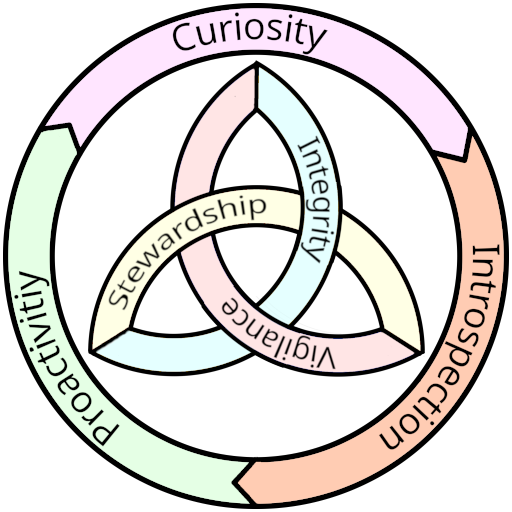
- Each virtue must be paired with its corresponding sin, establishing the two points required to create vectors for ethical directionality.
- The seven deadly sins provide a robust foundation; having endured for centuries, they have firmly stood the test of time. However, a few structural corrections are necessary.
- Because gluttony and lust overlap significantly, they should be merged.
- Conversely, envy is an innate, uncontrollable drive rather than a true vice.
- Finally, because there is currently no sin anchored to the virtue of integrity, a new one must be defined to complete the vector.
- The sins will be divided into two distinct groups to perfectly mirror the structure of the virtue categories.
- Progress => Self-Destruction
- Stability => Social Decay
The Sins of Social Decay

Greed
Earth provides enough to satisfy every man’s needs, but not every man’s greed.
Often regarded as the most destructive vice, greed turns natural collaborators into adversaries. Instead of seeing our fellow citizens as partners, we begin to view them as obstacles or problems to be managed.
This mindset shifts our collective focus from maximizing societal gains to aggressively maximizing personal wealth. The primary danger is that self-interested individuals rarely see any fault in their behavior, falsely assuming that everyone operates under the same ruthless logic. However, if this hyper-individualism becomes universal, society gradually fractures until it collapses.
While cooperative individuals actively sustain the health of the community, greed systematically drains its resources. Because this vice rewards the individual at the absolute expense of the collective, it carries no intrinsic drawback for the sinner, making it exceptionally dangerous. When an individual’s unchecked consumption causes widespread societal suffering, the community must intervene. We must either expel the problematic actor or, at the very least, strip them of any power or authority over others.
It involves:
- Viewing all human interactions as a battlefield where the victor is decided solely by who extracts the most value.
- The value of an action is no longer measured by its objective, collective outcome, but solely by personal acquisition.
- To erode the foundation of society by slowly draining its collective resources.
Deceit
It’s discouraging to think how many people are shocked by honesty and how few by deceit.
Deceit has historically hidden behind the guise of the “noble lie,” making it society’s most elusive and destructive vice. We must treat fraud and deception with the same severity as physical violence.
What begins as harmless “white lies” eventually distorts social reality, weaving truth and falsehood until they are indistinguishable. Because lying inherently benefits the liar, society must actively punish deceitful behavior before it collapses our collective foundations.
It involves:
- Lying for personal gain when it is not vital for our survival.
- Omitting important information on purpose to coerce people while maintaining plausible deniability.
- Deliberately using fallacies to manipulate public opinion.

Wrath
Might makes right!
This sin is often mistaken for a mindless, reckless force. In reality, its mission is far more devious: hatred. It convinces us to abandon compromise, debate, or understanding, demanding the destruction of the unknown.
Violence should never stand in the way of innovation. Resentment has its place for communicating distaste, but it is never a solution. To defeat this vice, we must master our emotions and look inward. If we choose to reject something, we need a complete understanding of why.
It involves:
- Weaponizing anger to dominate arguments rather than engaging in rational thought.
- Hating external factors simply because they cannot be forced to fit our norms.
- Viewing new information as dangerous and responding with exaggerated force.
The Sins of Self-Destruction

Pride
The more we have it in ourselves, the more we dislike it in others.
Pride is a tool people use to protect their ego, but it ultimately limits them.
This happens when we focus entirely on a specific personal strength, using it as the single metric to judge ourselves against everyone else. While this sin can be dangerous to society, it is usually most damaging to the individual. It stunts growth and kills happiness by blocking people out, leading to a lonely life, predictable behaviors and narrow interests.
The ultimate danger of a prideful leader is power. It breeds deep resentment, allows the mistreatment of the defenseless, and ultimately kills a group’s innovation.
The best antidote to pride is lifelong curiosity. We must constantly look outward and ask ourselves what others can teach us.
It involves:
- Ignoring others’ opinions because they are deemed inferior.
- Judging the worth of one’s life by an narrow, limited set of parameters.
- Minimizing the value of skills or areas where we lack proficiency.
Excess
The mother of excess is not joy but joylessness.
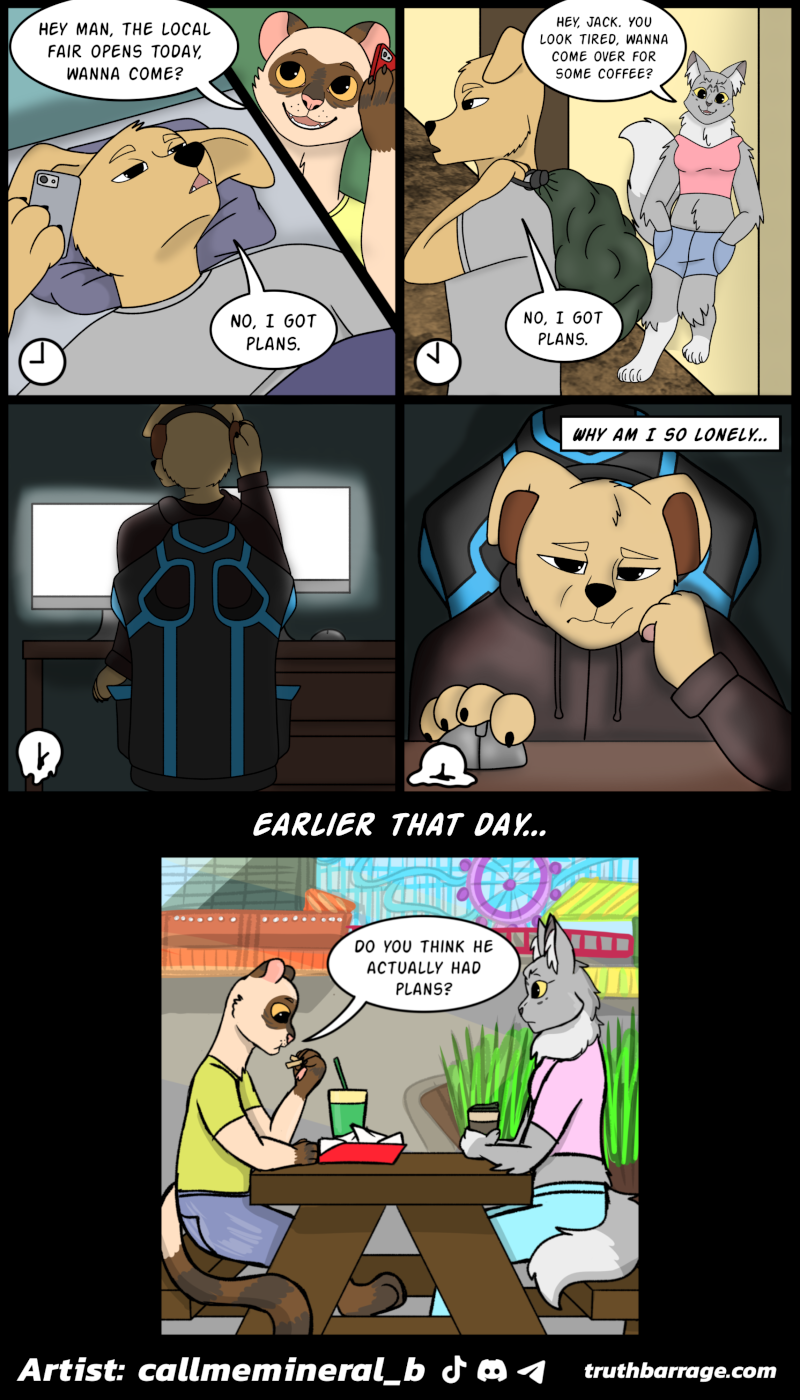
This is probably the most entertaining sin and it feels relatively harmless at first. The real danger starts when it transforms into an all-consuming force, hijacking your thoughts and actions. Excess creeps up on us while we do things bringing us legitimate joy. It wears many masks: food, sex, gaming, alcohol, work, etc.
Unlike other sins, it is healthy to give in a little, enjoy ourselves, and feel passionate. But like gravity, excess is a constant downward pull. If you aren’t careful, it sinks its hooks in until you can’t get out.
The best defense is diversification. Build a life with many different sources of happiness to avoid over-relying on just one. Sampling all the healthy joys of life is the ultimate key to staying free.
It involves:
- Relying on only a few activities for happiness, leading to unhealthy obsessions.
- Becoming defined by a highly limited number of traits and turning one-dimensional.
- Anything outside our obsession becomes a meaningless annoyance.

Sloth
The point is there ain’t no point
When life gets heavy, this sin is waiting to catch you. It offers comfort, telling you it’s okay to stop trying. It whispers that effort is pointless anyway.
Sloth might be the least destructive sin to society, but it causes agonizing personal pain. It looks like salvation, but it only ensures the sinner suffers. In a way, sloth is the floor of life. Once everything is taken from you, it pins you down and slowly suffocates your spirit.
Sadly, escapism and apathy fix nothing. They only cause life to worsen until a person gives up entirely. The ultimate weapon against sloth is connection. Just like quicksand, once it has its grip on you, you need help to get out.
If life feels too difficult and you are thinking about ending it, please reach out. Call or text 988 to connect with the 988 Suicide & Crisis Lifeline. You do not have to go through this alone.
It involves:
- Seeing life as entirely meaningless and devoid of purpose.
- Avoiding self-improvement because the effort feels too painful.
- Becoming apathetic to the problems of the world.